




Last Updated:
October 29th, 2026
Ketamine has a half-life of two to four hours, and depending on the test, it is detectable for weeks or even months after use. The question of “How long ketamine stays in your system” can really be asking many different things, from how long the high lasts to when you could confidently pass a drug test. To give a full answer, we address all these questions and explain why the timelines can vary so much.
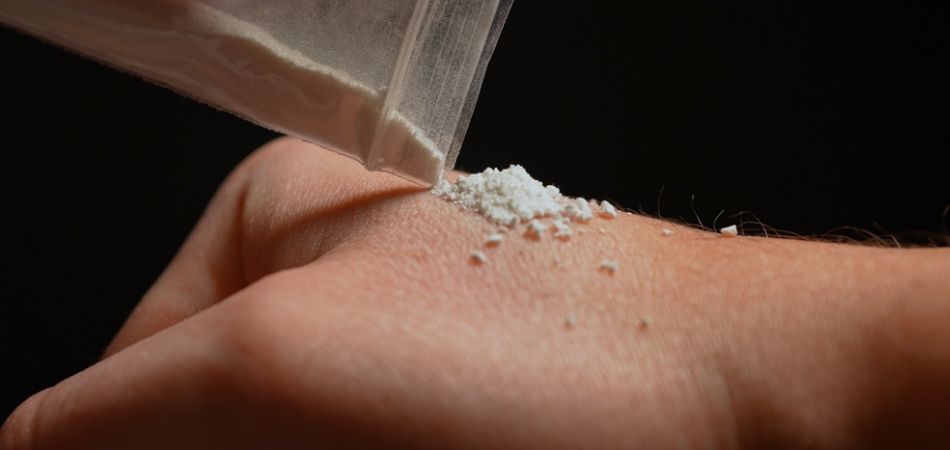
But you won’t usually feel completely back to normal the minute the effects fade. It’s normal to feel groggy or detached for a few hours afterwards, with the length and intensity of the comedown depending on how much you took that time and how much you take regularly.
However, your liver breaks ketamine down into ketamine metabolites, mainly one called norketamine and another called dehydronorketamine. These leave your body more slowly than the drug that made them. Tests look for the metabolites along with the ketamine itself.
Your pattern of use can also affect how long ketamine remains detectable. Someone who uses ketamine regularly or in large amounts may continue to test positive for longer than someone who uses it occasionally. If you use ketamine most days, it is safest to allow for the longer end of the possible detection window.
But nobody should treat this limit as some kind of target to stay slightly under. Ketamine greatly affects your coordination and sense of where you are, and it’s never safe to drive on it, no matter how much ketamine you’ve taken.
Your metabolism and your liver do the clearing, and anything that slows them, from age to liver damage to some medications, slows the whole timetable. Other drugs and alcohol also give the same liver more work, and everything clears more slowly.
Drinking lots of water dilutes your urine, and labs notice diluted samples and will probably just make you do another test or use a different testing method.
Exercise moves blood around, but your liver still works at its own speed. The myths survive because everybody who waits long enough tests negative eventually, whatever they did in between.
What are the risks of regular ketamine use?
Regular ketamine use can be very dangerous, regardless of test windows or detection times. Tolerance to ketamine builds quickly, so the same bag does less, and doses gradually creep up. Ketamine addiction is mostly psychological, but it can be a powerful dependency that makes quitting incredibly hard.
Your memory, mood, concentration, and mental health can all get worse with regular ketamine use. Ketamine can be incredibly harmful to the bladder, and regular users may experience urgent, painful trips to the toilet, blood in their urine, and stomach cramps. Bladder damage can become permanent, even after stopping. In the UK, incidents of ketamine-related bladder damage in Britain, especially among young people, have skyrocketed in recent years.

When to get help for ketamine addiction
Ketamine addiction responds well to treatment, and the earlier you start, the less there is to undo. In professional ketamine treatment at Primrose Lodge, you will work with our medical and therapy team to get through ketamine withdrawal safely and then work on your triggers and better ways of coping. For bladder trouble or other health issues, medical treatment may also be required alongside ketamine detox and ketamine rehab.
If you’re reading for somebody else, Primrose Lodge can help. We provide professional ketamine rehab and detox programmes with ongoing care to support you after treatment. The fact you are searching for ketamine detection time information is a sign that help is likely needed. Contact Primrose Lodge today, and we can discuss what we offer and how we can support you.
(Click here to see works cited)
- Adamowicz, Piotr, and Maria Kala. “Urinary Excretion Rates of Ketamine and Norketamine Following Therapeutic Ketamine Administration: Method and Detection Window Considerations.” Journal of Analytical Toxicology, vol. 29, no. 5, 2005, pp. 376-82, academic.oup.com/jat/article/29/5/376/730685.
- de Jong, Lutea A. A., et al. “Prolonged Ketamine and Norketamine Excretion Profiles in Urine After Chronic Use: A Case Series.” Journal of Clinical Psychopharmacology, vol. 40, no. 3, 2020, pp. 300-04, doi.org/10.1097/JCP.0000000000001191.
- “Ketamine.” Talk to Frank, www.talktofrank.com/drug/ketamine.
- Rosenbaum, Steven B., et al. “Ketamine.” StatPearls, StatPearls Publishing, 30 Jan. 2024, www.ncbi.nlm.nih.gov/books/NBK470357/.
- The Drug Driving (Specified Limits) (England and Wales) Regulations 2014. Legislation.gov.uk, www.legislation.gov.uk/uksi/2014/2868/regulation/2/made.

