




Last Updated:
November 10th, 2026
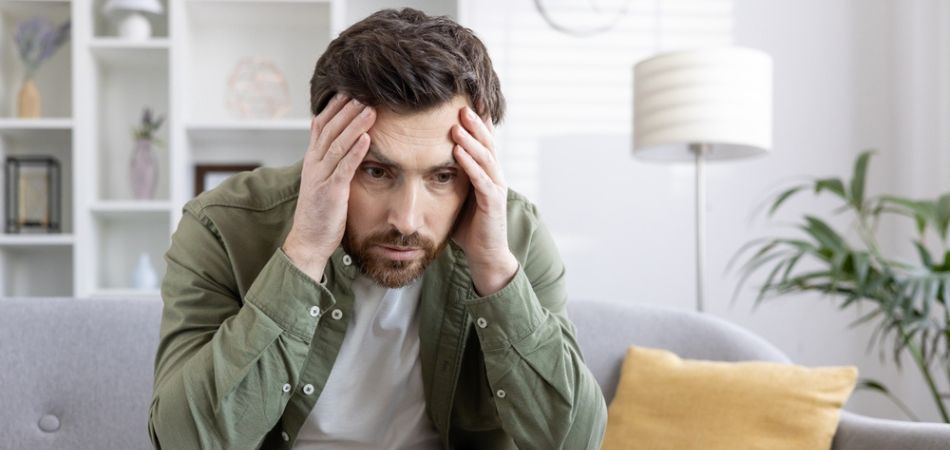
Addiction can cause huge anxiety, and some people become addicted to alcohol because they were drinking to manage anxiety. In some cases, anxiety improves considerably after you stop drinking. But in other cases, anxiety after getting sober can feel stronger than ever. This can come as a big blow, and the ongoing anxiety can make the day-to-day challenges of recovery feel harder. But anxiety in early recovery doesn’t mean that something has gone wrong or that you’ve missed something. There is usually a genuine reason which can be addressed, but which may require some extra work and a little patience.
Why anxiety in sobriety gets worse
Alcohol and drugs change your brain activity for a while. Drinking or using certain drugs can help you get through something that makes you anxious, or just quiet your mind enough to sleep. For people with chronic and severe anxiety, this can feel like the only way life is manageable.
Using substances in this way is often called self-medication, and it’s one of the major drivers of drug and alcohol addiction. People self-medicate for various mental and emotional health difficulties, including depression, PTSD, the symptoms of conditions like ADHD, and, commonly, anxiety.
In some cases, mental health symptoms may be entirely new, triggered by the drinking or drug use. This may be from the chemical effects, or because you’re stressed or worried about the harm being done to your health or family.
The problem is that if the underlying reason for the anxiety is not resolved, the issue will remain when you’re sober, and anxious thoughts and feelings will continue. With no alcohol or drugs to dampen the anxiety, it can feel more intense than ever.
Alcohol and drug withdrawal anxiety
If you drank heavily for a long time, your nervous system has adapted to alcohol being there, and it needs time to settle without it. That period where your systems are out of balance is when withdrawal symptoms hit, including drug and alcohol withdrawal anxiety.
In the first few weeks, you might feel restless, have racing, uncontrollable thoughts, a short temper, poor sleep, a pounding heart, sweats, and constant worries about recovery, your health, and just everything in general.
Anxiety after stopping drugs or alcohol isn’t the same for everyone, but it can be really overwhelming. In some cases, people end up relapsing just to get some relief. How rough withdrawal anxiety feels depends on what you were using, how much, how long you’d been using it, whether you’re getting any support during withdrawal, and your overall physical and mental health.
An important withdrawal safety note
If you were drinking to manage anxiety or taking benzodiazepines like diazepam or Xanax, whether prescribed or not, withdrawal can be very dangerous. You should never quit alcohol or benzodiazepines without first speaking to your GP or an addiction service like Primrose Lodge. Even if you don’t think you’re dependent, it’s always safest to get advice and support.
How your brain adjusts in early recovery
If anxiety is purely a result of withdrawal, it comes down to how your brain and body change with heavy substance use over a long time. This leaves your body’s stress response more sensitive due to artificially high or low levels of natural chemicals that drugs and alcohol affect. The extra sensitivity makes everyday pressure feel more intense than it used to, so anxiety in early recovery can feel out of proportion to what’s happening around you.
Early sobriety also tends to come with poor sleep and changes in appetite, and being worn out can make you more anxious too. The unknown of what your life is going to look like when you’re sober can also add to the pressure. But while this is a difficult period to get through, anxiety after detox is common and is usually a good sign of your body and mind adjusting.
Learning to cope without a drink or a drug
In early recovery, you have to learn to cope with a stressful day or a difficult conversation without a drink to make it easier. You may not have done that for a long time, so getting sober can also bring new anxiety about whether you’re capable.
It can take a while to feel confident again, especially if you’re facing up to what happened before you stopped, or getting used to changed relationships and routines. Sober anxiety can come from facing up to the harm caused by addiction, beginning the process of getting back to work or education, repairing financial damage and starting over, and just learning to trust yourself again.
For many people, the fear of relapse can be a constant source of anxiety, especially in the early days. This gets easier, but the first few weeks and months require real support and a plan for coping.
Practical ways of coping with anxiety in recovery
Coping with anxiety in recovery can sometimes be as simple as doing a little better today than yesterday.
Try to wake up and go to bed at around the same times each day, because a regular routine gives your body less to react to.
It’s important to eat regularly, because you’re likely to feel more anxious if you’re running on too little sleep or your blood sugar has dropped because you skipped a meal. Think carefully about what you’re eating and drinking, and cut back on caffeine, because it can make you feel more on edge.
Make time to exercise and stay active every day, whether that’s a walk in the park, yoga, a morning jog, or a full-on gym session. This releases endorphins, and it can be one of the best ways to improve physical and mental health in recovery.
Simple meditation and breathing exercises like those we teach in rehab at Primrose Lodge can help calm busy thoughts and keep your baseline anxiety down with regular practice.
Finally, lean on your recovery support network as much as you can. Isolation can make anxiety worse, but having someone you can talk to can stop it from spiralling.
Therapy and other support that can help
A trained therapist can take a lot of the guesswork out of managing anxiety. Together you can work out whether it’s withdrawal or an old anxiety coming back, and that can change the approach.
If you’re managing anxiety and addiction recovery together, it’s important that your treatment and aftercare teams approach them as connected. Many talking therapies used in rehab and aftercare programmes also help with anxiety. For example, cognitive behavioural therapy helps you notice anxious thoughts and check whether they’re true. That gives you something to do other than wait for the feeling to pass. Dialectical behaviour therapy helps you tolerate difficult situations better, so they create less anxiety in the first place.
Most anxiety in early sobriety eases with time, but this isn’t always the case. If anxiety continues to get worse, is stopping you from working, sleeping, seeing people, managing an ordinary day, or ever feeling calm or happy, speak to your GP or recovery. If anxiety is pushing you to think seriously about using drugs or alcohol again, tell your recovery team so they can adjust your plan.
Talk to Primrose Lodge today
If anxiety has been far harder in sobriety than you expected, Primrose Lodge can help. Get in touch and tell us how you’ve been feeling, and we can help you work out whether it’s withdrawal or something older. Anxiety can be a major obstacle to recovery, but with the right plan and support in place, it’s a challenge you can overcome.
(Click here to see works cited)
- Grant, Bridget F., et al. “Prevalence and Co-Occurrence of Substance Use Disorders and Independent Mood and Anxiety Disorders: Results From the National Epidemiologic Survey on Alcohol and Related Conditions.” Archives of General Psychiatry, vol. 61, no. 8, 2004, pp. 807-816, doi.org/10.1001/archpsyc.61.8.807.
- Khantzian, Edward J. “The Self-Medication Hypothesis of Substance Use Disorders: A Reconsideration and Recent Applications.” Harvard Review of Psychiatry, vol. 4, no. 5, 1997, pp. 231-244, doi.org/10.3109/10673229709030550.
- National Institute for Health and Care Excellence. Alcohol-Use Disorders: Diagnosis and Management of Physical Complications. NICE guideline CG100, 2010, updated 2017, www.nice.org.uk/guidance/cg100.
- Sinha, Rajita. “Chronic Stress, Drug Use, and Vulnerability to Addiction.” Annals of the New York Academy of Sciences, vol. 1141, 2008, pp. 105-130, doi.org/10.1196/annals.1441.030.

