





Written by:

Medically Reviewed by:
Last Updated:
August 10th, 2026
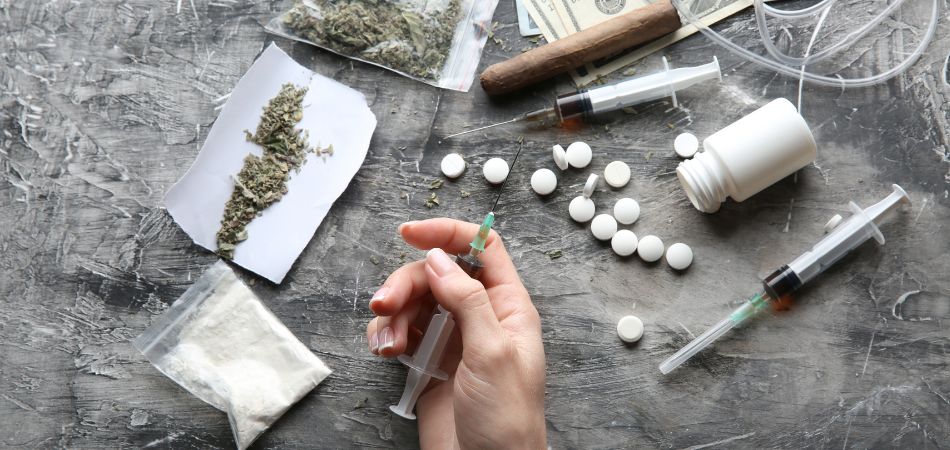
In 2023/24, 39% of all violent incidents in England and Wales involved a victim who believed the offender had been drinking. This works out at around 440,000 alcohol-related violent incidents in a single year.
That figure tells you something real about the link between substances and violence. But it can also mislead you if you stop reading there, as the same statistics show that most people who drink and use drugs never hurt anyone at all. But alcohol and drugs can make violence more likely in some people and in some situations. To make sense of drug and alcohol-related violence, you have to understand where that risk really comes from.
How alcohol and drugs lower the brakes on behaviour
The clearest way to understand the link between drugs, alcohol, and aggression is to think about what substances do to the part of your brain that holds you back.
The prefrontal cortex is the part of the brain that weighs up consequences and stops you acting on a first angry impulse. Alcohol dampens how well it works, while the more reactive, emotional parts of the brain carry on as normal. The result is that a provocation which a sober person would shrug off can feel like something that demands a response. This is why people become more impulsive the more they drink, and why arguments can escalate into something physical far more often when alcohol is involved.
Research has found that people with an alcohol use disorder are involved in violence at around five times the rate of people without one. The same research finds that up to half of alcohol-dependent men show some violent behaviour. But this effect is not evenly spread, and the science is clear that it depends heavily on the individual. That is why two people can drink the same amount, and only one of them ends up in trouble.
Paranoia and feeling under threat
Not every substance works by loosening inhibition, and some raise the risk of violence by changing how safe a person feels.
Stimulants such as cocaine and amphetamines are the clearest examples. At higher doses and with heavier use, they can produce paranoia and, in some cases, a genuine break from reality. Drug-induced aggression in these situations often comes out of fear. Someone who has become convinced that the people around them mean them harm may strike first, against a threat that is not really there.
Researchers see this kind of aggression as quite different from the simple loss of inhibition you see with alcohol. This can change what the warning signs look like. A person becoming withdrawn, suspicious, and convinced that others are watching them is showing the kind of change that can come before violence.
Why the effect is not the same for every substance
One of the most useful things research can tell us is that drugs and violence do not work to the same rules for every drug, and the numbers vary enormously depending on the substance.
A large Oxford-led systematic review drew on eighteen studies and more than half a million people. It found that people with a drug use disorder had roughly four to ten times the risk of violence compared with people without one, though the figures for individual drugs ranged widely.
For cannabis use disorder, for example, the odds of violence across studies ran from around one to seven, and for cocaine from around two to eleven. Those ranges are far too wide to back up any claim that cannabis or cocaine specifically just make people violent.
Some of the findings also go against what people might expect. Opioids, despite their association with crime, tend to calm aggression while someone is actually under their influence. The violence around them usually has more to do with the grip of dependence and the desperation of needing the next dose than with the drug’s immediate effect.
Cannabis tends to calm aggression in the moment as well, and the raised risk that does show up in the research is concentrated in people who already have a serious mental illness or a heavy dependence.
The way addiction and behaviour change together over an extended period is often a bigger risk factor for violence than the immediate intoxication effects of any single dose. Even so, alcohol and aggression are consistently the most closely linked, which is striking considering alcohol is legal and widely normalised in society.
Other risk factors for substance-related violence
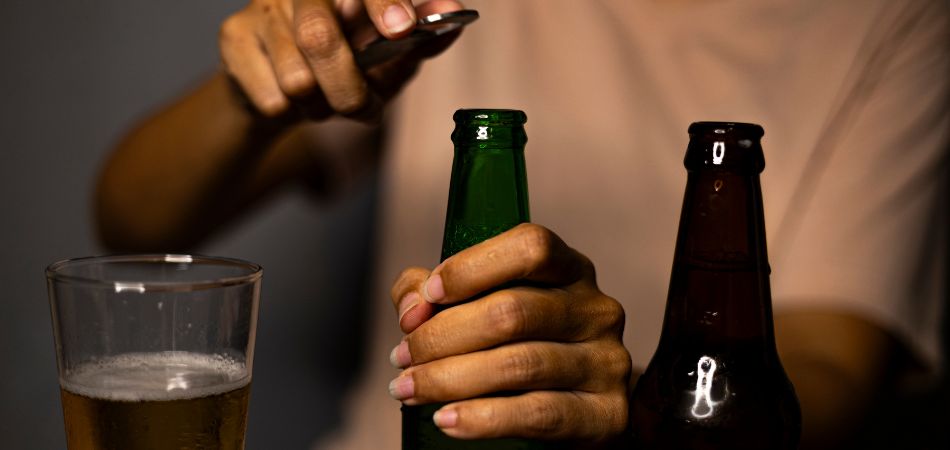
If substances were the whole story, the risk would be the same for everyone who used them. Clearly, that is not the case. Research consistently shows that substance use is only one part of a much more complex picture, with several other factors influencing whether intoxication ever leads to violence.
A history of violence in childhood, whether experienced directly or witnessed within the home, increases the likelihood of violent behaviour later in life. Poverty, social exclusion, and long-term exposure to stress can also increase risk. Equally important are learned beliefs about alcohol and aggression. People who grow up in environments where drinking is seen as an excuse for intimidation or violence may be more likely to behave aggressively when intoxicated.
The environment itself also plays a significant role. In 2023/24, 24% of domestic abuse incidents in England and Wales involved an offender whom the victim believed had been drinking. This serves as a reminder that much substance-related violence occurs behind closed doors, between people who know one another, rather than between strangers in public places.
The same drink, consumed by the same person, may pass without incident on one occasion but end in violence on another. The difference often lies not in the substance itself, but in the circumstances surrounding its use, the relationships involved, and the tensions that existed long before the first drink was poured.
Harm reduction for substance-related violence
There is a hopeful side to this, because something can be done at every stage, well before anyone is hurt. Harm reduction means more than telling people to drink less, though bringing down the heaviest drinking does lower the risk.
Real harm reduction means treating the things that are underneath the addiction and behaviour. The evidence shows that helping someone deal with an alcohol or drug addiction is one of the most effective ways of bringing down the violence that comes with it.
The difficulty is that most people who develop a drug or alcohol addiction never receive any treatment, often because they don’t see their use as a problem until it has already caused harm. Spotting the pattern early, in yourself or in someone close to you, can help make prevention possible. Signs include rising tolerance, growing tension at home, out-of-character moods or behaviours, and using drugs or alcohol for difficult feelings. These are the kinds of changes that often come before a more dangerous escalation.
Get professional support for violence and addiction
If you are worried about your own drinking or drug use, or about someone you care about, Primrose Lodge can help. The behaviour that frightens you is treatable, because it is bound up with a substance problem that responds to the same support as any other illness.
Primrose Lodge provides medical detox, therapy, and aftercare in rehab treatment centres across Britain. Our team can talk through what is happening and what your options are, without judgement. Contact Primrose Lodge today to find out how we can help you take the first step.
(Click here to see works cited)
- Beck, Anne, and Andreas Heinz. “Alcohol-Related Aggression—Social and Neurobiological Factors.” Deutsches Ärzteblatt International, vol. 110, no. 42, 2013, pp. 711–15, https://doi.org/10.3238/arztebl.2013.0711.
- Heinz, Adrienne J., et al. “Cognitive and Neurobiological Mechanisms of Alcohol-Related Aggression.” Nature Reviews Neuroscience, vol. 12, no. 7, 2011, pp. 400–13, https://doi.org/10.1038/nrn3042.
- Miczek, Klaus A., et al. “Alcohol, Drugs of Abuse, Aggression, and Violence.” Understanding and Preventing Violence, Volume 3: Social Influences, edited by Albert J. Reiss Jr. and Jeffrey A. Roth, National Academy Press, 1994, pp. 377–570, https://doi.org/10.17226/4421.
- Rafiei, Dorsa, and Nathan J. Kolla. “Fact or Faction Regarding the Relationship between Cannabis Use and Violent Behavior.” Journal of the American Academy of Psychiatry and the Law, 2021, https://doi.org/10.29158/JAAPL.210034-21.
- “Violence and Crime.” Institute of Alcohol Studies, 5 Feb. 2026, www.ias.org.uk/factsheet/violence-and-crime/.
- Zhong, Shaoling, et al. “Drug Use Disorders and Violence: Associations With Individual Drug Categories.” Epidemiologic Reviews, vol. 42, no. 1, 2020, pp. 103–16, https://doi.org/10.1093/epirev/mxaa006.

