




Last Updated:
August 28th, 2026
If you’ve been prescribed amoxicillin and you are wondering whether a glass of wine with dinner is off the table, here’s the reassuring part first: The NHS is clear that you can drink alcohol while taking amoxicillin, and that you can eat and drink normally throughout the course. Amoxicillin and alcohol do not clash in the body the way some drug pairings do, and a drink will not stop the antibiotic from doing its job. So there is no hidden poison to fear here. The real question is why drinking while you are unwell is still rarely a good idea, and why sensible caution is always worth listening to.
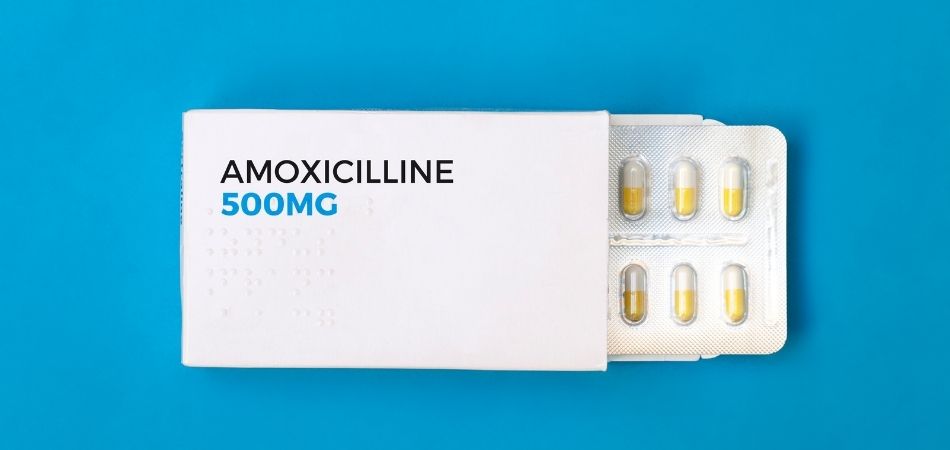
Why are we always told not to drink on antibiotics?
The warning about mixing antibiotics and alcohol has been around for so long that most people assume every antibiotic turns a pint into something risky. The truth is more specific. A small number of antibiotics really do react badly, and the rest of the advice is a mix of sensible caution and habit.
The genuine culprit is a class that includes metronidazole and tinidazole, often given for dental and stomach infections. These can cause what is called a disulfiram-like reaction because the drug blocks an enzyme your body uses to break alcohol down. The result is a build-up of a substance called acetaldehyde, which brings on flushing, a thumping heart, nausea and vomiting. It is unpleasant enough that people are told to avoid alcohol during the course and for two or three days afterwards.
A handful of other antibiotics carry their own warnings too, such as certain ones used for resistant or serious infections, but amoxicillin is not one of them. It is partly because of these few genuine troublemakers that the blanket no-drinking rule spread to every antibiotic, even the ones it doesn’t really apply to.
Is there any drug interaction at all with amoxicillin and alcohol?
With amoxicillin and alcohol, there’s no dramatic chemical clash in your bloodstream to worry about. The drug interaction that does happen is really just because alcohol piles its own effects on top of how you already feel.
Amoxicillin has its own common side effects, and the most frequent ones involve the stomach and gut. Many people feel a bit sick, and some have diarrhoea or an upset stomach while they’re on it. Alcohol irritates the gut lining and can also cause queasiness of its own, so adding a few drinks to a stomach that is already unsettled tends to make it worse.
There is also the matter of how rough you feel more generally. If the infection or the antibiotic is giving you a touch of dizziness or a headache, alcohol can worsen both. This isn’t a dangerous drug reaction, but it puts extra strain on a body that’s already working hard to clear an infection.
What drinking does to your recovery
Giving your body the best chance to do this infection-clearing work is where the real argument for avoiding alcohol comes in.
The first big reason is sleep. Alcohol might feel as though it helps you drop off, but it disrupts the deeper, restorative stages of sleep, and rest is one of the simplest things recovery depends on.
The second is hydration. Alcohol is a diuretic, so it dehydrates you, and dehydration leaves you feeling more tired and makes symptoms like headaches worse.
Your immune system is another big reason not to drink when you’re taking amoxicillin. Research is clear that alcohol affects immune function, even in fairly modest amounts, though the meaningful harm shows up mostly with heavy or regular drinking. A single glass is unlikely to derail your defences, but a heavy night while your body is mid-battle is working against the systems trying to get you well.
The effects of drinking on the immune system may not be visible until you suddenly have a new infection. Heavy or long-term drinkers who run into trouble when mixing antibiotics and alcohol may not have realised their immune system was compromised.
Does alcohol ever stop amoxicillin from working?
This is the question that most people are really asking, and the answer is a clear no. Alcohol does not reduce antibiotic effectiveness with amoxicillin, and a drink will not undo the medicine or render your course useless. The myth that any alcohol cancels out all antibiotics is one of the most stubborn around, and it is not true for amoxicillin.
What is true is that…
Finishing the course is what really matters
The NHS advice on amoxicillin is plain, and you should always take it seriously: You should keep taking amoxicillin until the course is finished, even once you feel better, because stopping early can let the infection regroup and come back. Most people start to feel better within a few days, but feeling better is not the same as being clear of infection. If you are no better after three to five days, or you start to feel worse at any point, tell your doctor.
This connects to drinking because if a heavy night leaves you so unwell that you’re sick and miss doses, or feel too rough to keep the course going as prescribed, then the alcohol has done indirect harm, even without any chemical reaction at all.
The sensible bottom line
Amoxicillin is one of many everyday medicines, and like most antibiotics in the penicillin family, the official guidance on alcohol and medication here is relaxed. The NHS gives the same green light for close relatives of amoxicillin, so there is no special trap waiting in this particular drug.
A drink or two while taking amoxicillin will almost certainly do you no harm. Honest advice comes down to common sense. When you are unwell enough to need antibiotics, your body does better with rest, fluids and a bit of patience than with a session at the pub. Easing off the drink until you are well is a kindness to yourself, not a strict medical rule.
When drinking is the harder thing to stop
For most people, skipping alcohol for a week of antibiotics is a minor thing. For some, however, it turns out to be surprisingly hard, and that can be telling. If going without a drink even while you’re ill and on medication feels difficult, or you find yourself drinking through a course despite meaning not to, it may be a sign of alcohol addiction.
At Primrose Lodge, we help people understand their drinking and, where they want or need to, stop with proper medical support. When you are ready to talk, get in touch, and we will walk you through our alcohol detox and alcohol rehab programmes.
(Click here to see works cited)
- Anderson, Leigh Ann. “Can You Drink Alcohol with Antibiotics?” Drugs.com, 21 Nov. 2025, www.drugs.com/article/antibiotics-and-alcohol.html. Accessed 19 June 2026.
- “Common Questions about Amoxicillin.” NHS, 2 June 2025, www.nhs.uk/medicines/amoxicillin/common-questions-about-amoxicillin/.
- “Common Questions about Flucloxacillin.” NHS, 8 July 2025, www.nhs.uk/medicines/flucloxacillin/common-questions-about-flucloxacillin/.
- Szabo, Gyongyi, and Banishree Saha. “Alcohol’s Effect on Host Defence.” Alcohol Research: Current Reviews, vol. 37, no. 2, 2015, pp. 159–170. https://doi.org/10.35946/arcr.v37.2.01.

